

โครงการออกแบบภายในสถานที่เยียวยาจิตใจผู้ที่มีปัญหาทางด้านอารมณ์ด้วยเสียงและกิจกรรมบำบัด Sound Therapy

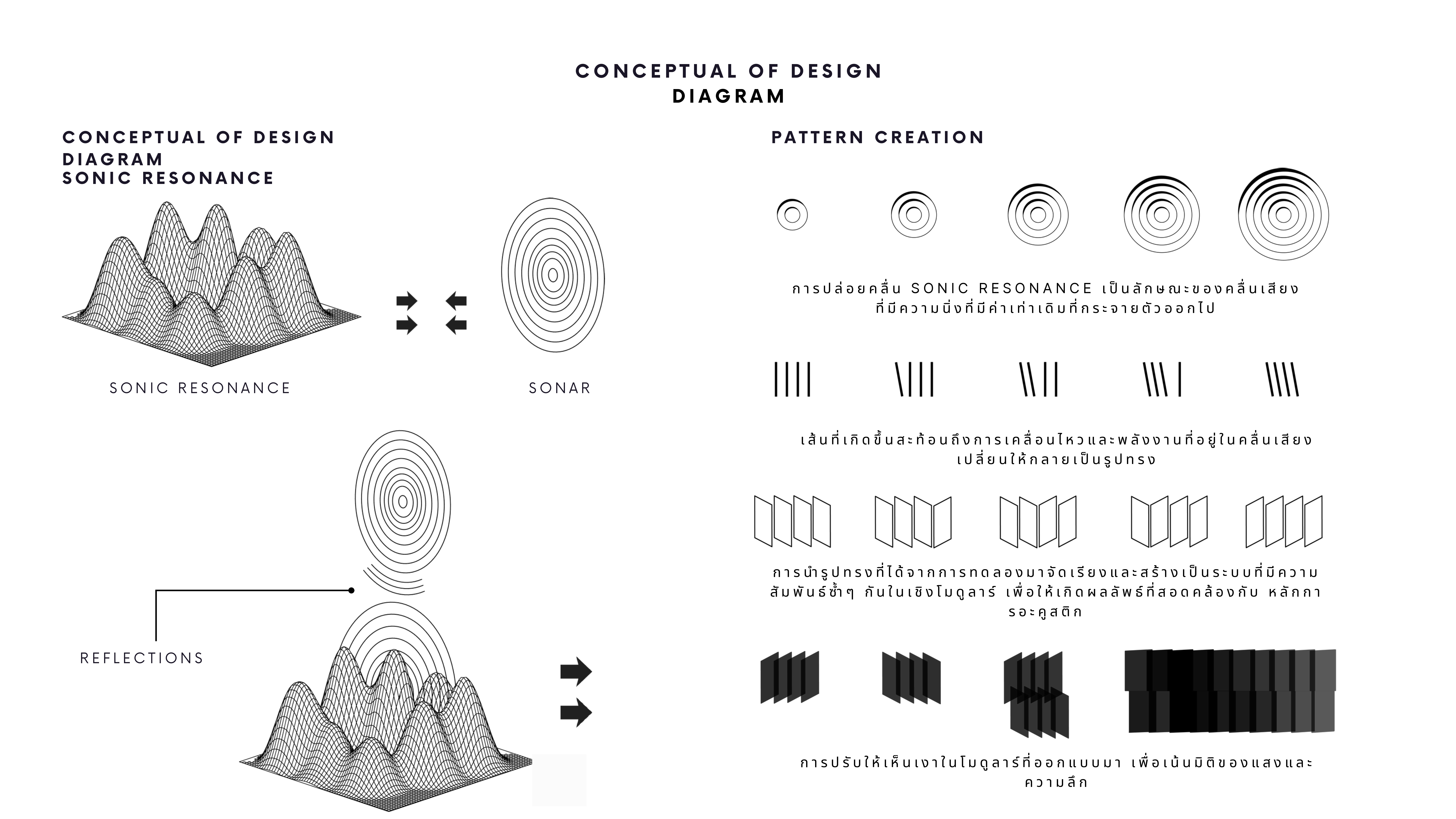
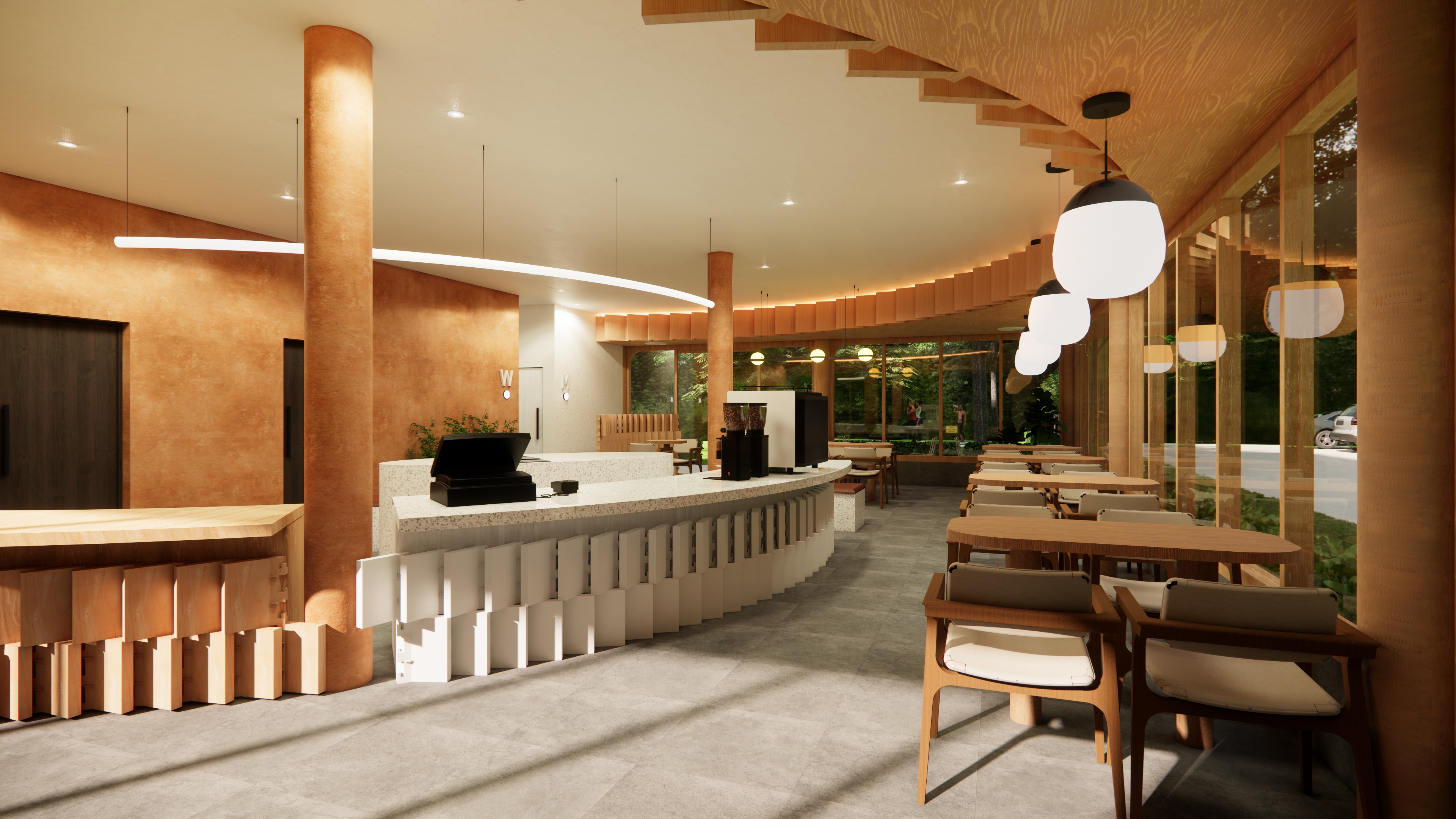
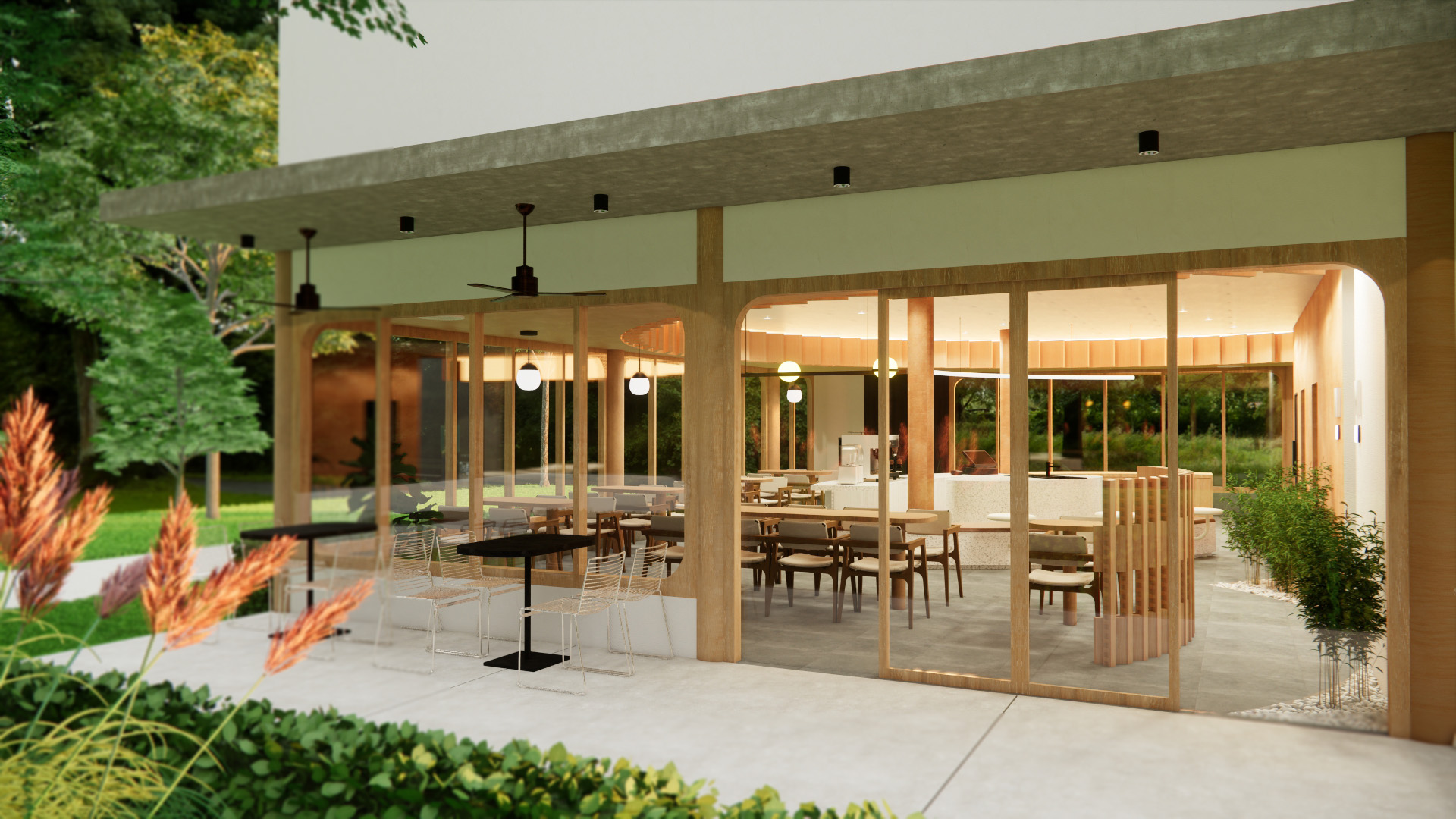
แนวคิด Sonic Resonance คือการนำคลื่นเสียงที่มองไม่เห็นมาตีความใหม่ให้มีตัวตนผ่านเทคนิคอะคูสติกส์และการออกแบบ โดยอาศัยหลักการของ sonar ที่ทำให้เกิดการสะท้อนกลับของคลื่นเสียงจนเกิดเป็นภาพที่มีมิติ คล้ายพิกเซลของเสียงที่สะท้อนโครงสร้างที่มองไม่เห็น ทำให้เกิดความลึก ความซับซ้อน และรูปแบบที่มีความไดนามิก
ในด้านการออกแบบ Sonic Resonance ถูกนำมาใช้เป็นเครื่องมือเชื่อมโยงเสียงและความรู้สึกของผู้ใช้งานผ่าน การมองเห็น (Visualization) และ การสัมผัส (Experiential Design) โดยมีการทดลองปล่อยคลื่นเสียงในรูปแบบต่าง ๆ เช่น เส้นตรง บิดไปมา และสร้างระนาบ เพื่อศึกษาการสะท้อนเสียงที่เหมาะสมกับหลักการอะคูสติกส์ โดยเฉพาะในพื้นที่ที่ใช้สำหรับการบำบัดด้วยเสียงและโยคะหัวเราะ
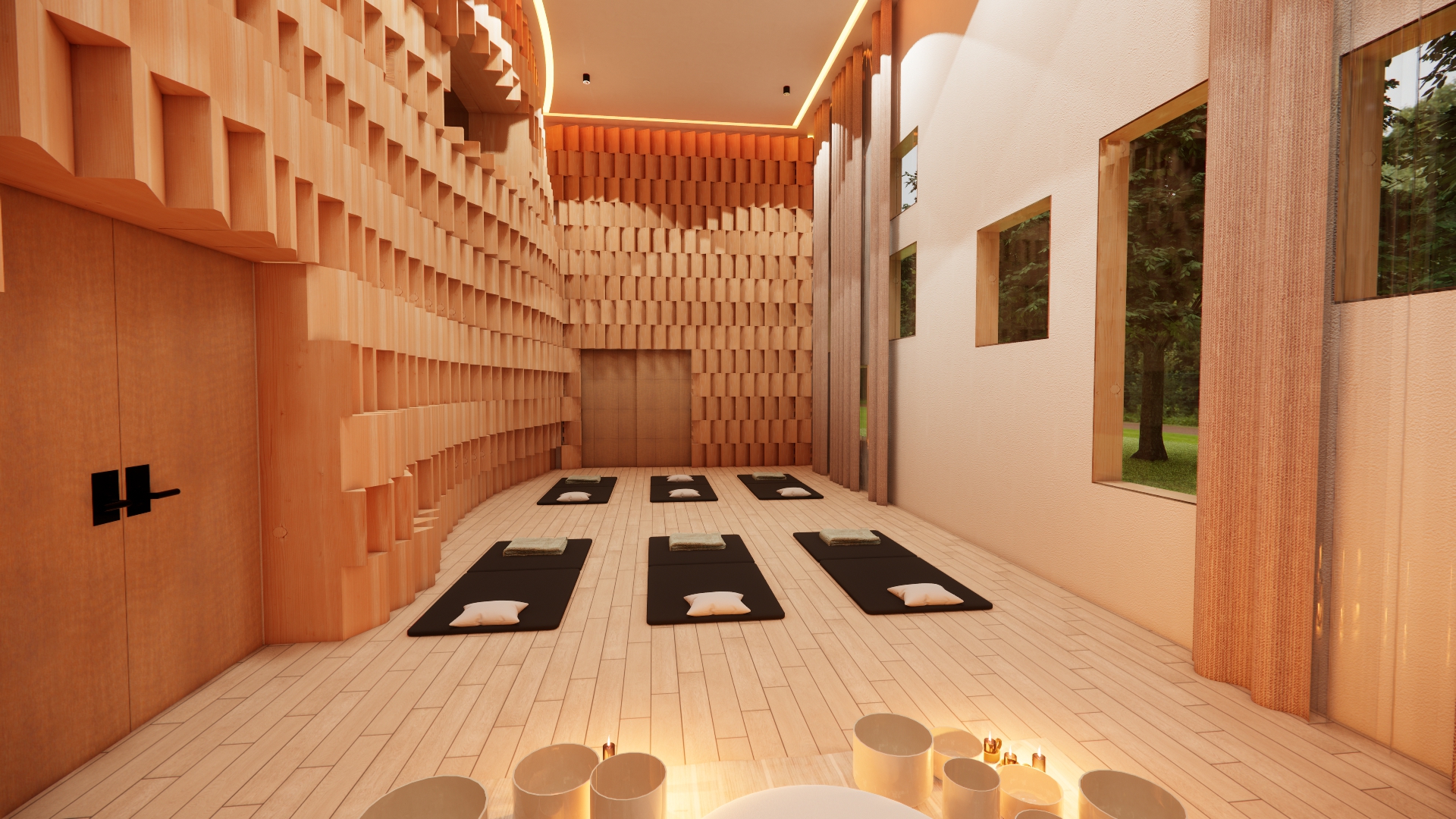
การออกแบบผนังอะคูสติกส์อ้างอิงจากหลักการของ Anechoic Chamber ซึ่งเป็นห้องไร้เสียงสะท้อน อย่างไรก็ตาม ในงานออกแบบเพื่อการบำบัด จะลดการดูดซับเสียงบางส่วนเพื่อให้เกิดการสะท้อนที่เหมาะสมกับคุณภาพของเสียงดนตรี สร้างสภาวะที่ช่วยกระตุ้นอารมณ์และจิตวิญญาณของผู้ใช้งาน
Sonic Resonance is the concept of interpreting invisible sound waves into tangible forms through acoustic techniques and design. It is based on the principles of sonar, where sound waves bounce back to generate multidimensional visual representations. These reflections create "sonic pixels," reflecting an invisible elements and revealing depth, complexity, and dynamic patterns.
In design, Sonic Resonance acts as a bridge between sound and human perception through visualization and experiential design. Experiments have been conducted by emitting sound waves in various patterns—straight lines, oscillating forms, and planar structures—to explore optimal acoustic reflections. This approach is particularly relevant to spaces designed for sound therapy and laughter yoga.
The design of acoustic walls draws inspiration from the Anechoic Chamber, a space that completely absorbs sound. However, for therapeutic applications, full absorption is modified to allow controlled reflections that enhance the richness of musical sounds. This creates an atmosphere that stimulates emotions and spiritual well-being, enriching the user's sensory experience.


Published: