

โครงการออกแบบศูนย์การเรียนรู้เพื่อการย้อมคราม
The Indigo Dyeing Learning Center

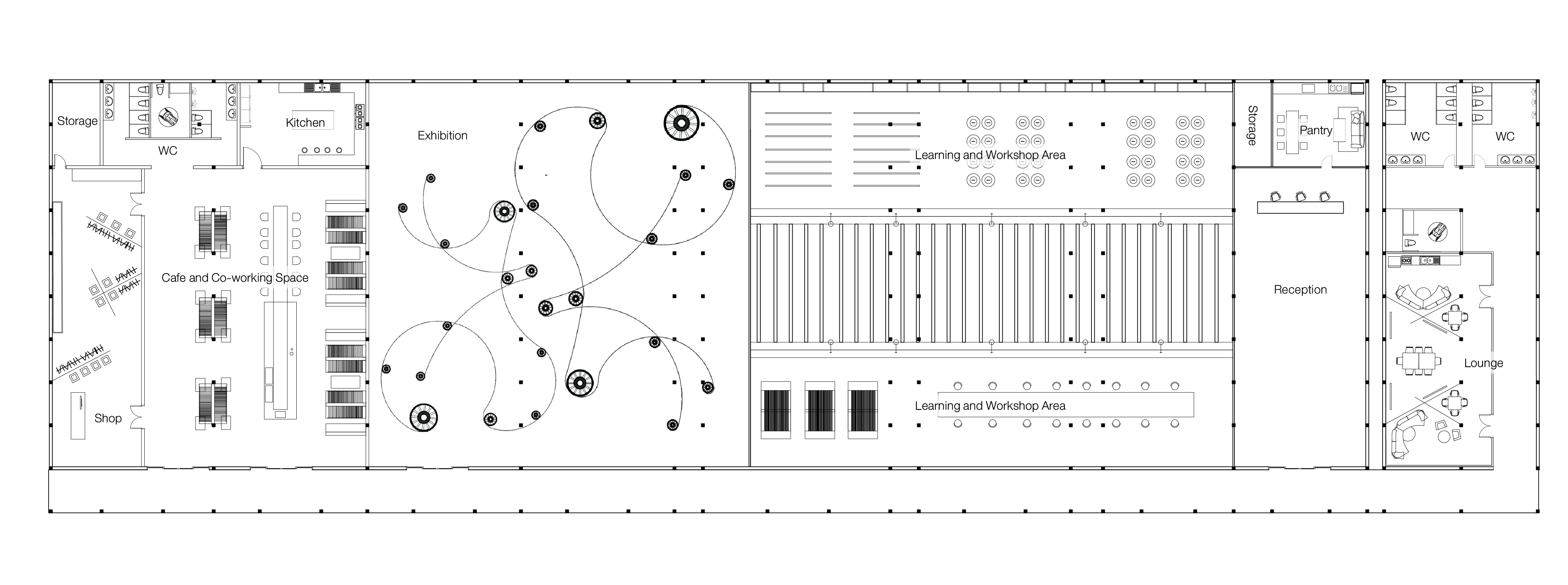
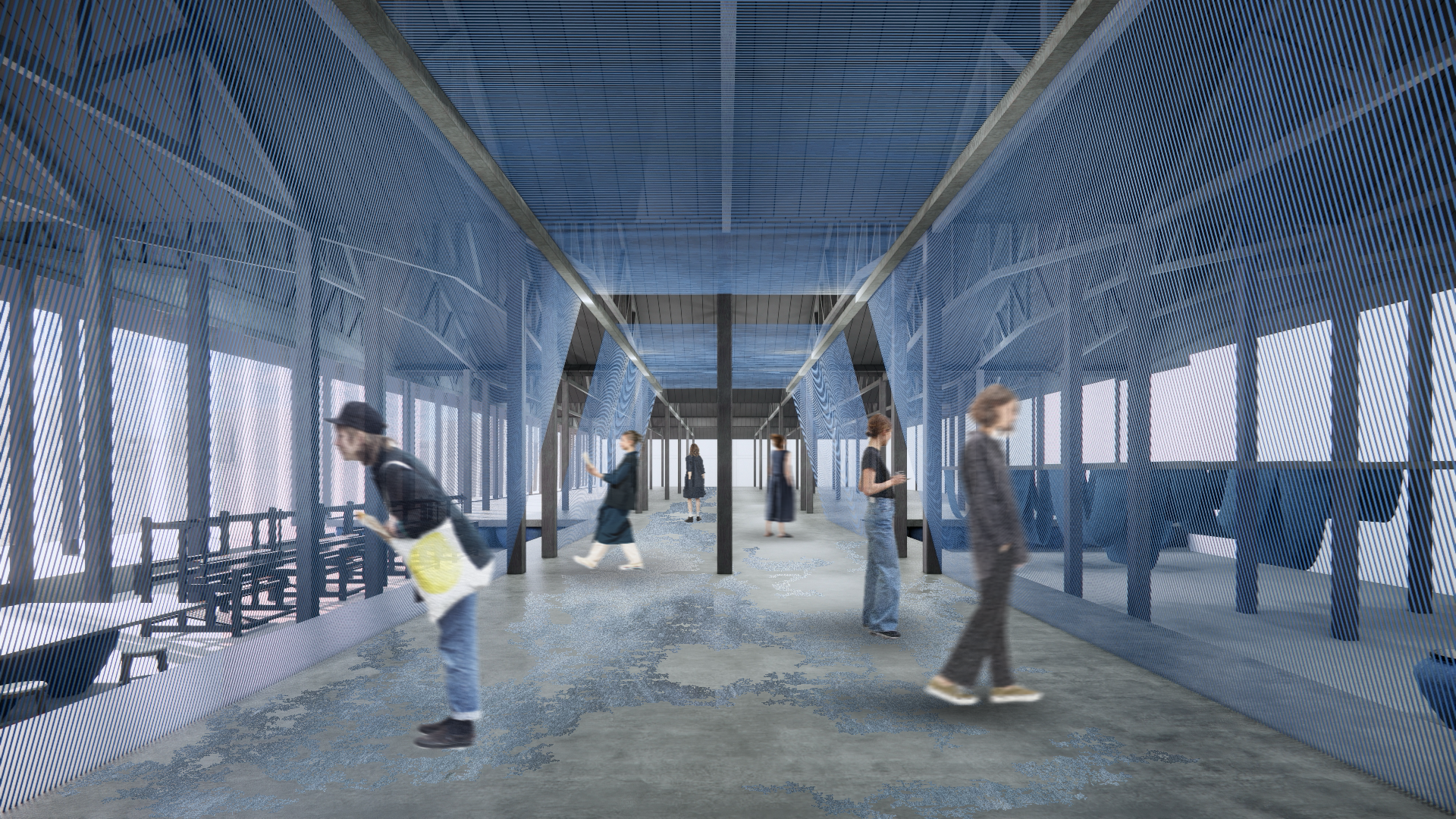
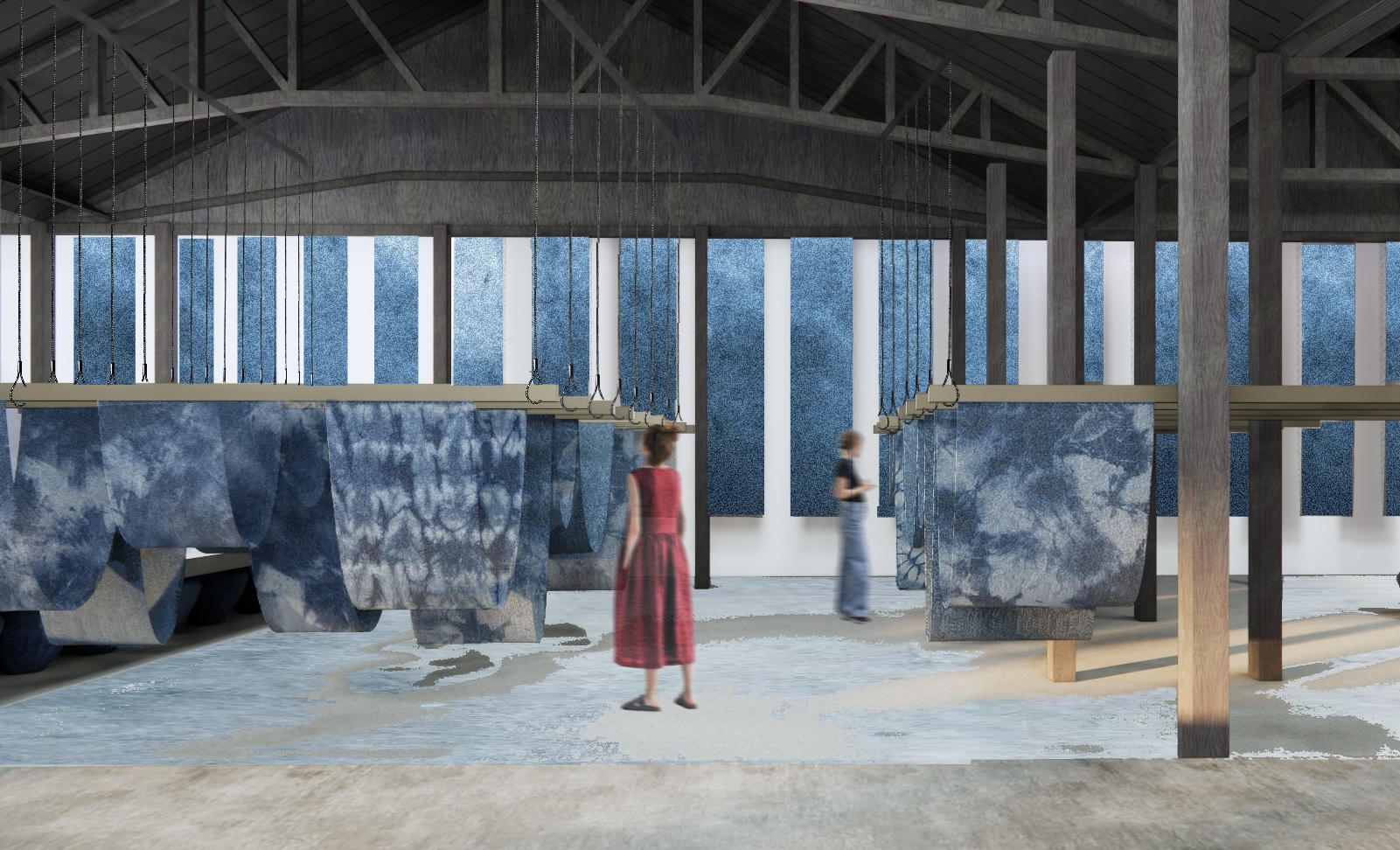
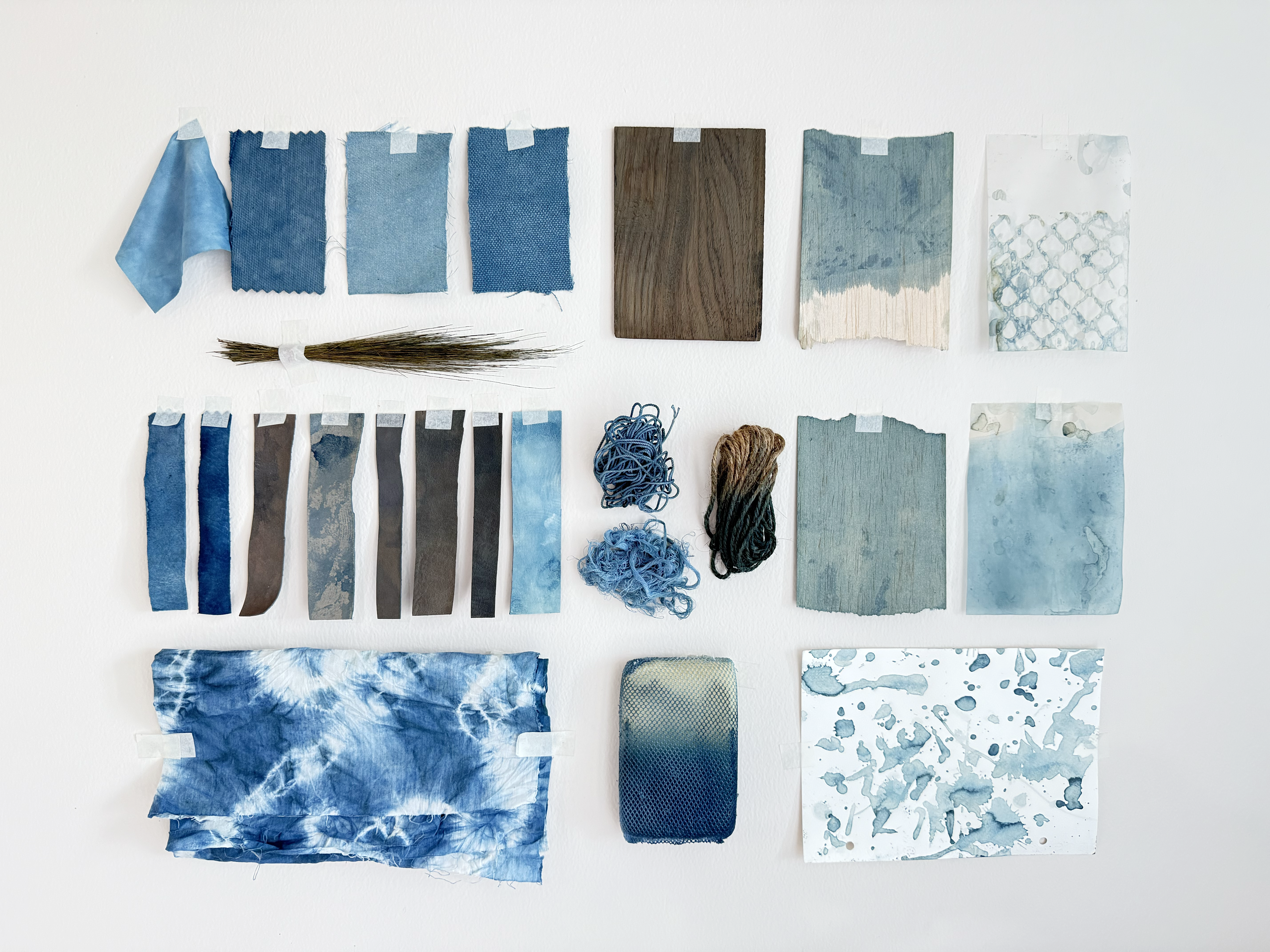
ศูนย์การเรียนรู้การย้อมคราม เพื่อสร้างความตระหนักรู้และเปลี่ยนมุมมองที่มีต่อการย้อมครามขึ้นใหม่ กลวิธีการย้อมครามตามธรรมชาตินั้นมีเสน่ห์และน่าสนใจ จึงศึกษาทดลอง ผนวกกับหลัก Design Thinking และเกิดเป็นพื้นที่ที่ออกแบบมาเพื่อรองรับกับการทำกิจกรรมเกี่ยวกับการย้อมคราม การย้อมครามแบบดั้งเดิม ชาวบ้านนิยมนำมามัดย้อม หรือย้อมกันในเส้นใยฝ้าย หลังจากนั้นจะนำมาทอบนกี่ทอ โดยลักษณะที่เส้นฝ้ายขึงอยู่บนกี่ทอ เกิดเป็นมิติที่สวยงาม จึงนำไอเดียนี้มาออกแบบเป็นพื้นที่โถงใหญ่ที่อยู่ในส่วนของพื้นที่ workshop
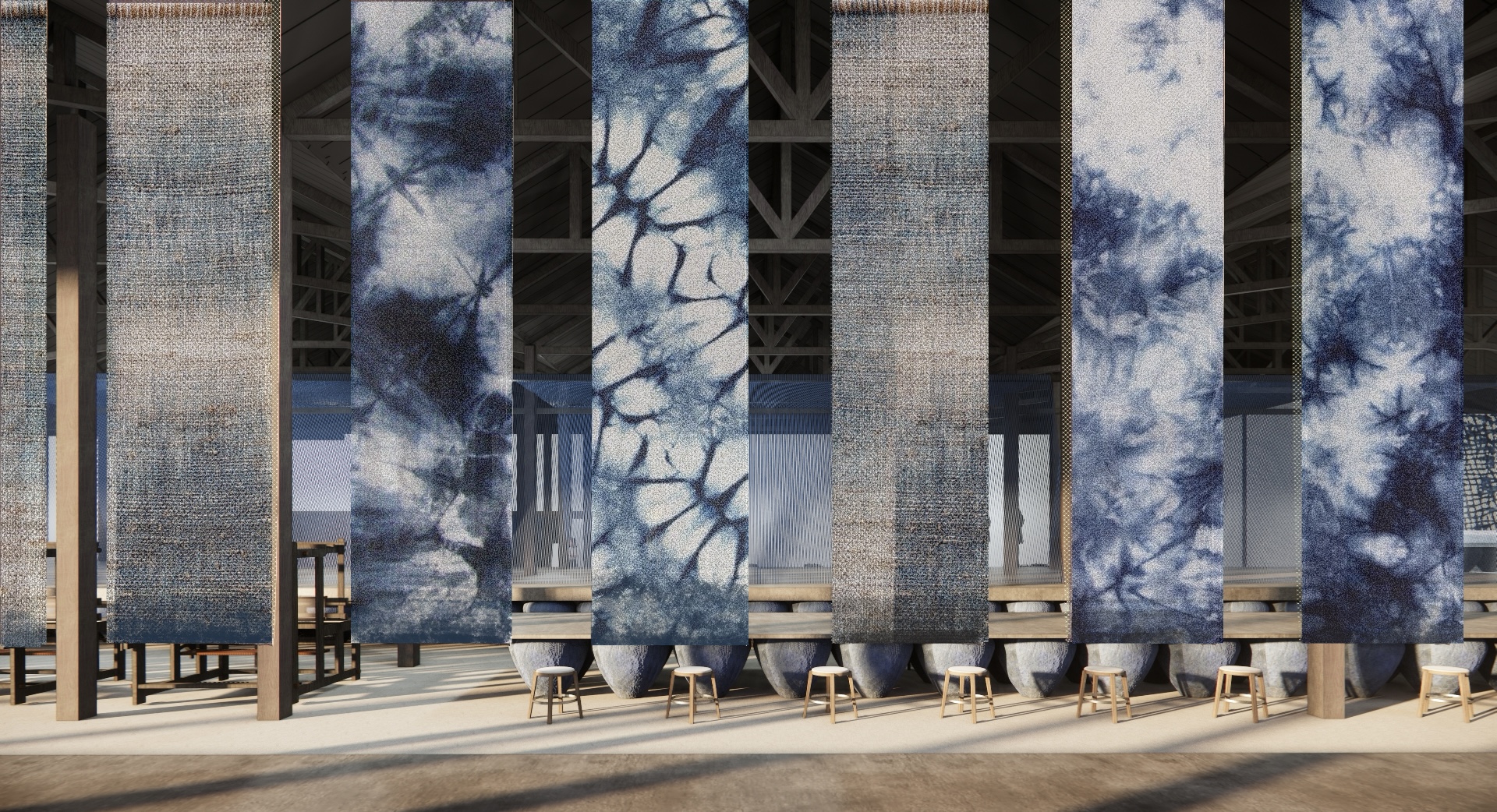
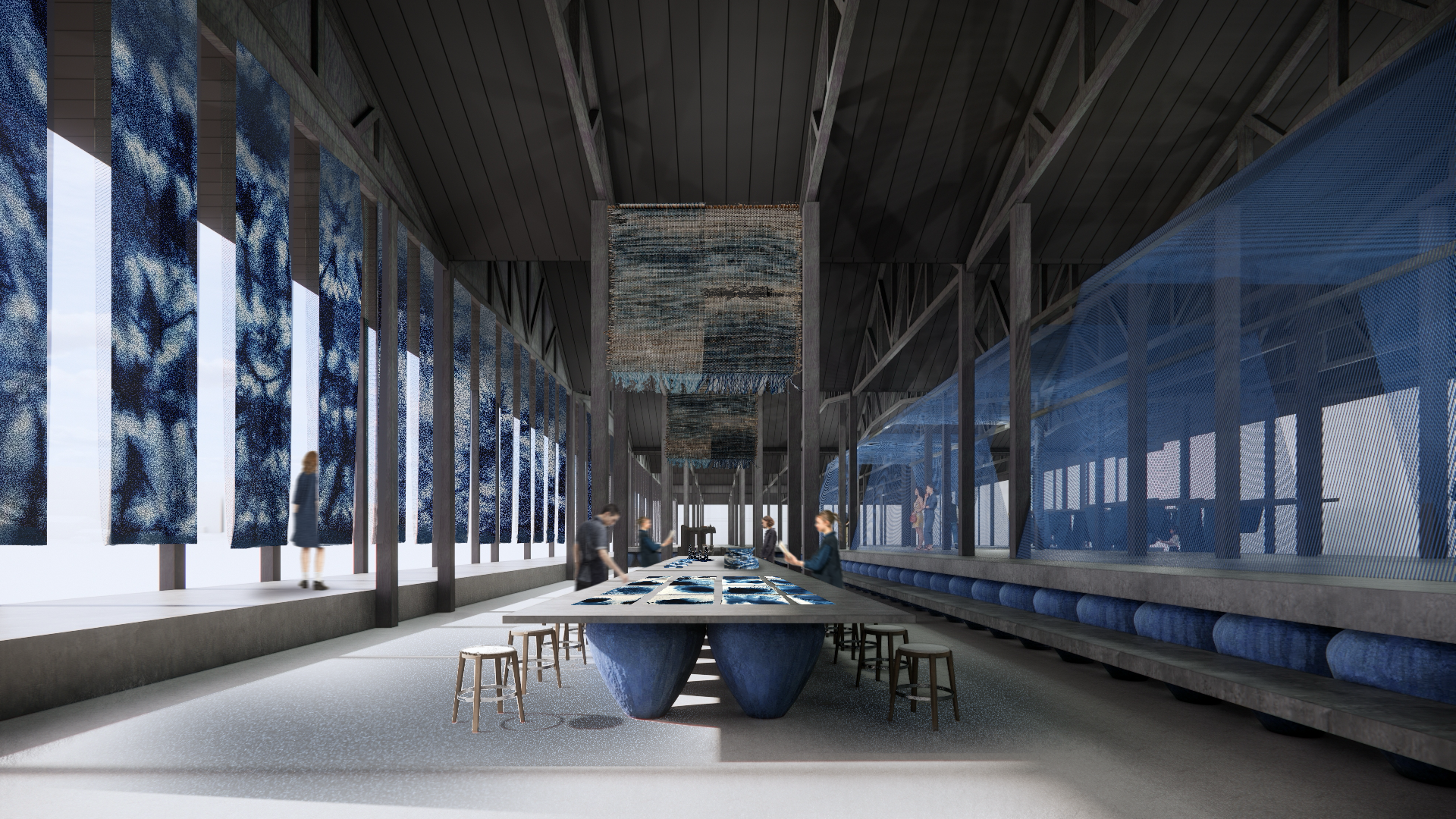
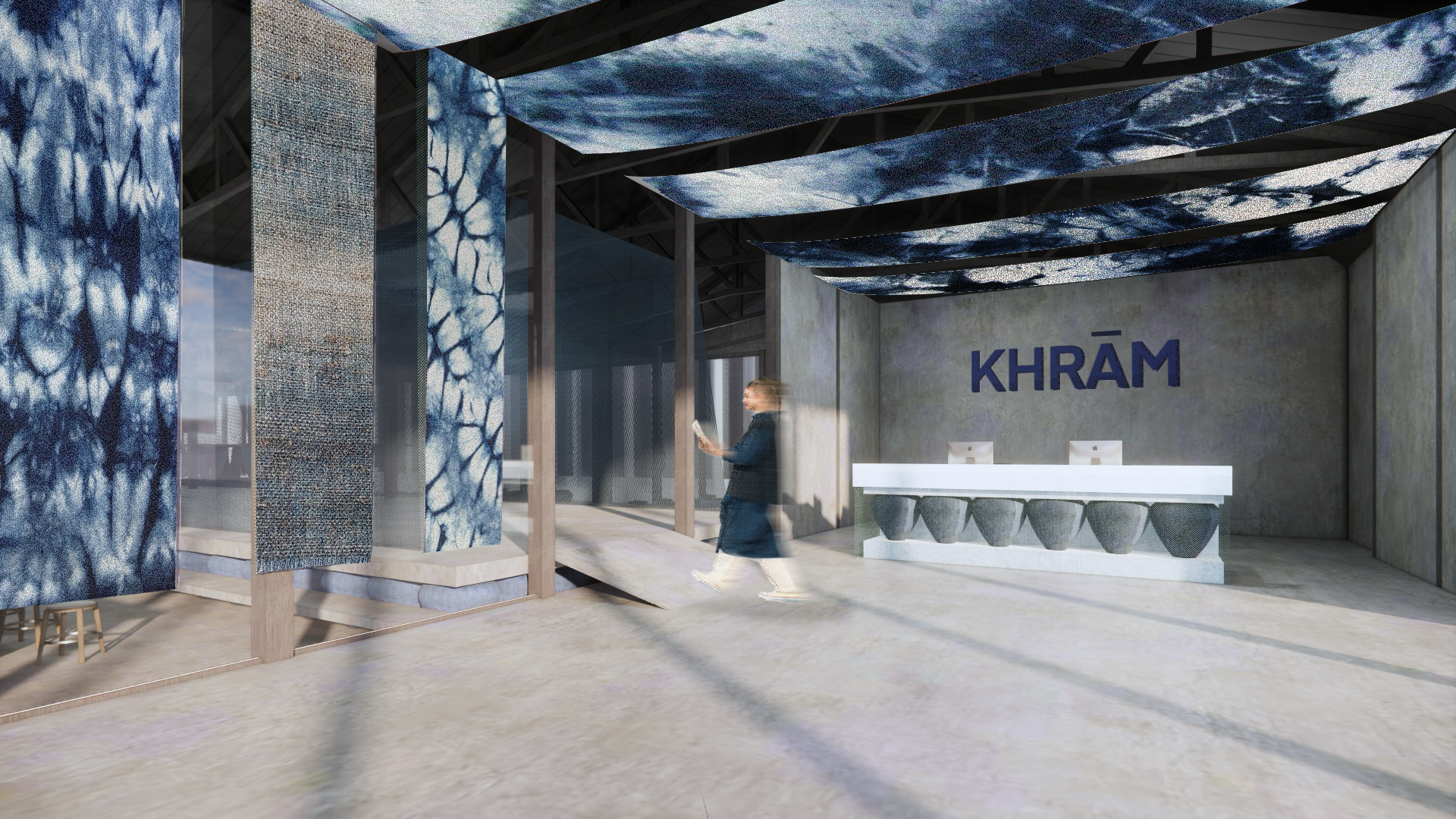
นอกจากนี้โอ่งที่ใช้ในการย้อมครามก็เป็นสิ่งสำคัญในการออกแบบครั้งนี้ โดยนำโอ่งที่ผ่านกิจกรรมการย้อมครามแล้ว มาประดับใต้พื้นให้ราวกับว่าพื้นนี้ถูกยกไว้ด้วยโอ่งที่วางเรียงต่อกัน รวมไปถึงโต๊ะที่ใช้ทำกิจกรรมก็ถูกยกหน้าไม้ขึ้นมาด้วยโอ่งเช่นกัน
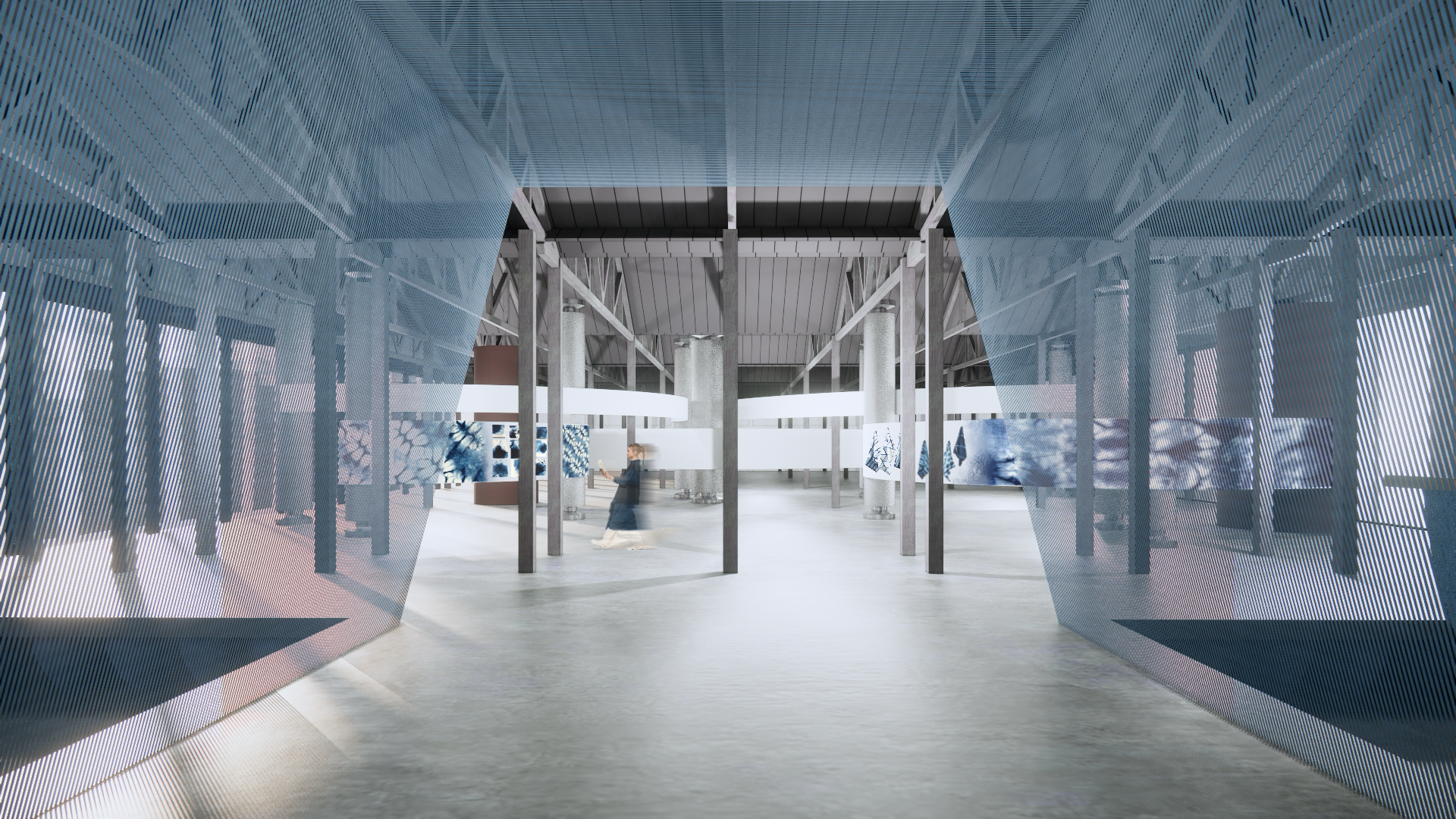
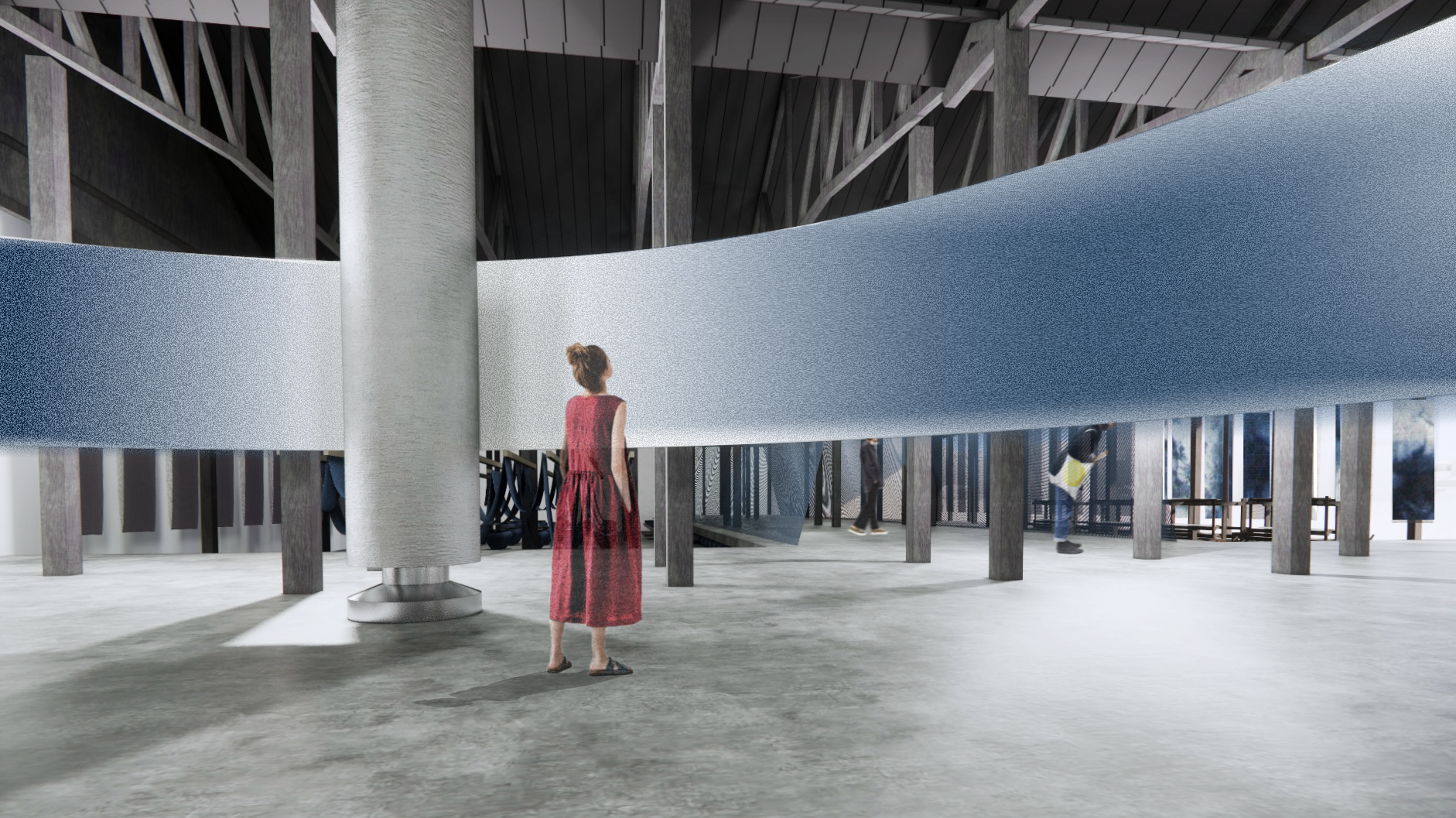
แรงบันดาลใจต่อมา เกิดจากด้ายที่อยู่ในแกนม้วนด้าย เมื่อนำด้ายมาพันต่อกับแต่ละแกนม้วน พาดกันไปมาอย่างเป็นอิสระ จะทำให้เกิดพื้นที่ที่สวยงามระหว่างเส้นด้ายเหล่านั้น ผู้ออกแบบจึงนำความคิดริเริ่มนี้มาออกแบบเป็นพื้นที่จัดแสดงเกิดเป็นนิทรรศการหมุนเวียน
The Indigo Dyeing Learning Center aims to raise awareness and reshape perspectives on natural indogo dyeing. The traditional dyeing process holds a unique charm and fascination, inspiring in-depth study and experimentation. By integrating Design Thinking principles, this space is thoughtfully designed to accommodate activities related to indigo dyeing, encouraging creativity and hands-on learning. Traditional indigo dyeing has long been practiced by villagers, primarily for tie-dyeing or coloring cotton fibers. These dyed fibers are then woven on traditional looms, creating a beautiful texture as the stretched cotton threads interlace. This idea inspired the design of a large hall within the workshop area, showcasing the delicate artistry of traditional weaving.
Moreover, the earthen jars used for indigo dyeing play a significant role in this design. These jars, once used in actual dyeing activities, are repurposed as decorative elements beneath the floor, creating the illusion that the floor is supported by rows of jars. Similarly, the activity tables feature wooden tops elevated by jars, integrating functionality with design aesthetics.
Another source of inspiration comes from the threads wound around spindles. When freely wound and crisscrossed, the threads create visually striking spaces between them. This concept is reflected in the exhibition space design, resulting in a rotating exhibition that embodies the dynamic beauty of intertwined threads.
Published: